

London Gatwick Route 4 Airspace Change Consultation (ACP-2018-86)
Overview
CONSULTATION NOW CLOSED
London Gatwick has been consulting on options for the future operation of Route 4 - one of the departure routes for aircraft flying out of the airport. Planes flying on Route 4’s departure routes take off to the west, before turning 180 degrees northwards, and then heading east in the vicinity of South Holmwood, Leigh, Redhill and Reigate before flying on towards their destination.
London Gatwick is following the Civil Aviation Authority’s (CAA) airspace change process as outlined here. Before changes to airspace can be made, a rigorous process must be undertaken to design different options, assess these options against safety, noise, overflight, tranquillity, emissions and habitats impacts and engage with communities and stakeholders that may be affected by the changes in a public consultation. Watch the video below to find out more about the consultation process.
This consultation ran from Tuesday 20 January 2026 until 23:59 Tuesday 28 April 2026.
Understanding the materials on this site
On this site, you can find out about the history of the Route 4 airspace change proposal (ACP), the shortlisted options, the results of the technical assessments undertaken and how to give your feedback. This website includes interactive tools aimed at supporting your understanding of the likely impact and performance of each option, and the graphic below sets out all of the ways to find out more.
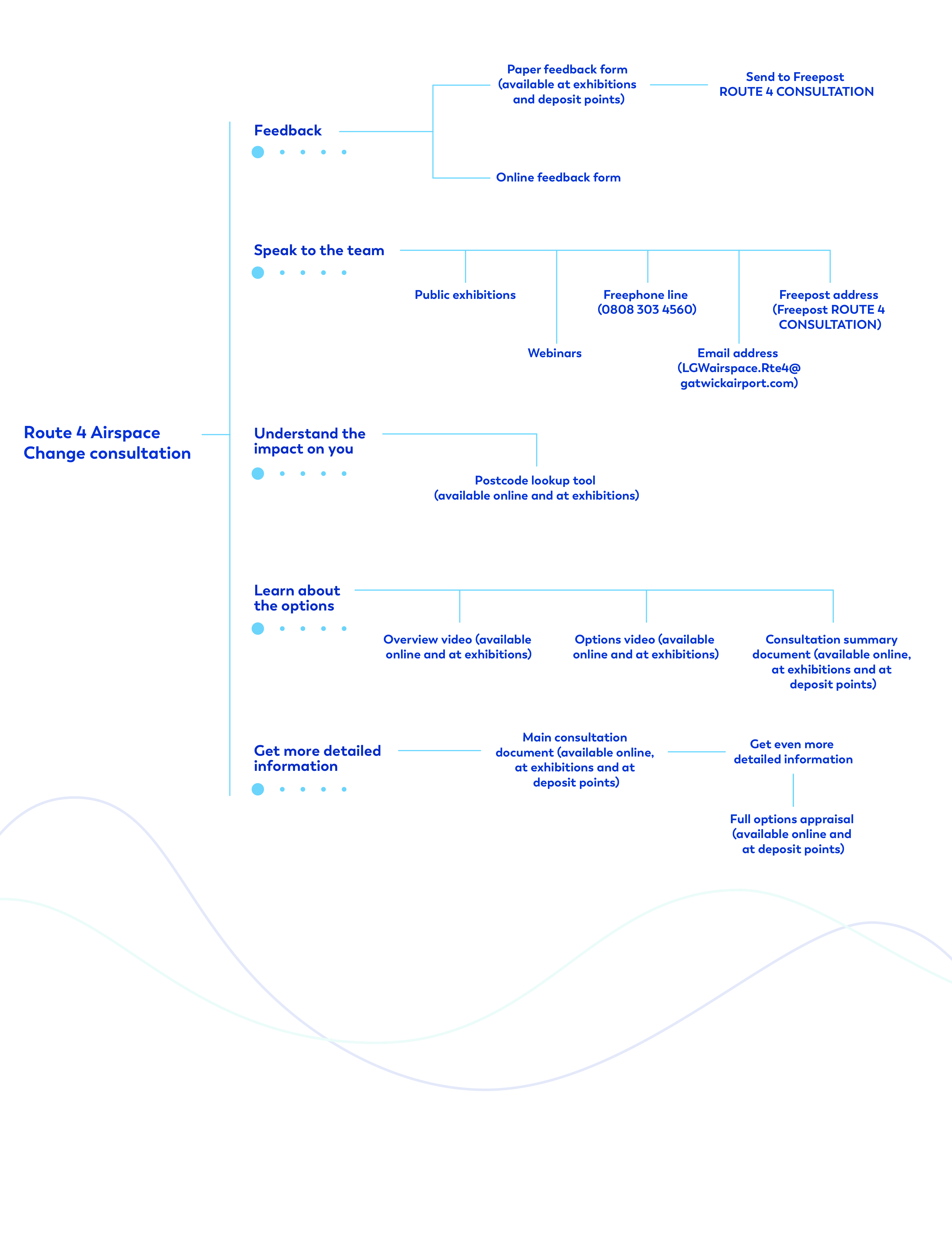
Airspace change can be a complex topic, and we encourage you to get in touch with us at LGWairspace.Rte4@gatwickairport.com or 0808 303 4560 if you have any questions.
You can view an HTML adaptation of our Consultation Summary Document here and understand the impacts of each route option using the postcode lookup tool here. Scroll to the bottom of this page to find links to our consultation documents.
History
UK airspace was designed in the 1950s using old forms of navigation technology which are in the process of being phased out as part of a wider government-led drive to modernise UK airspace. Across the UK, airports are required to adopt new navigational procedures which use modern, satellite-based technology.
Satellite-based navigational procedures were first introduced on all nine departure routes from the Main Runway at London Gatwick in 2013, including Route 4, following an ACP process and extensive community engagement. However, due to regulatory and legal challenges, this technology was subsequently withdrawn on Route 4 in 2019.
Since then, London Gatwick has undertaken extensive work to progress an ACP to reintroduce the new navigational procedures on Route 4 and overcome issues identified in the legal challenge.
The aim of the ACP that we have consulted on is to reintroduce satellite-based navigation on Route 4. This is essential because ground-based navigation technology is being withdrawn. We have consulted and sought feedback on four options for the future operation of Route 4 developed with input from community representatives and industry stakeholders.
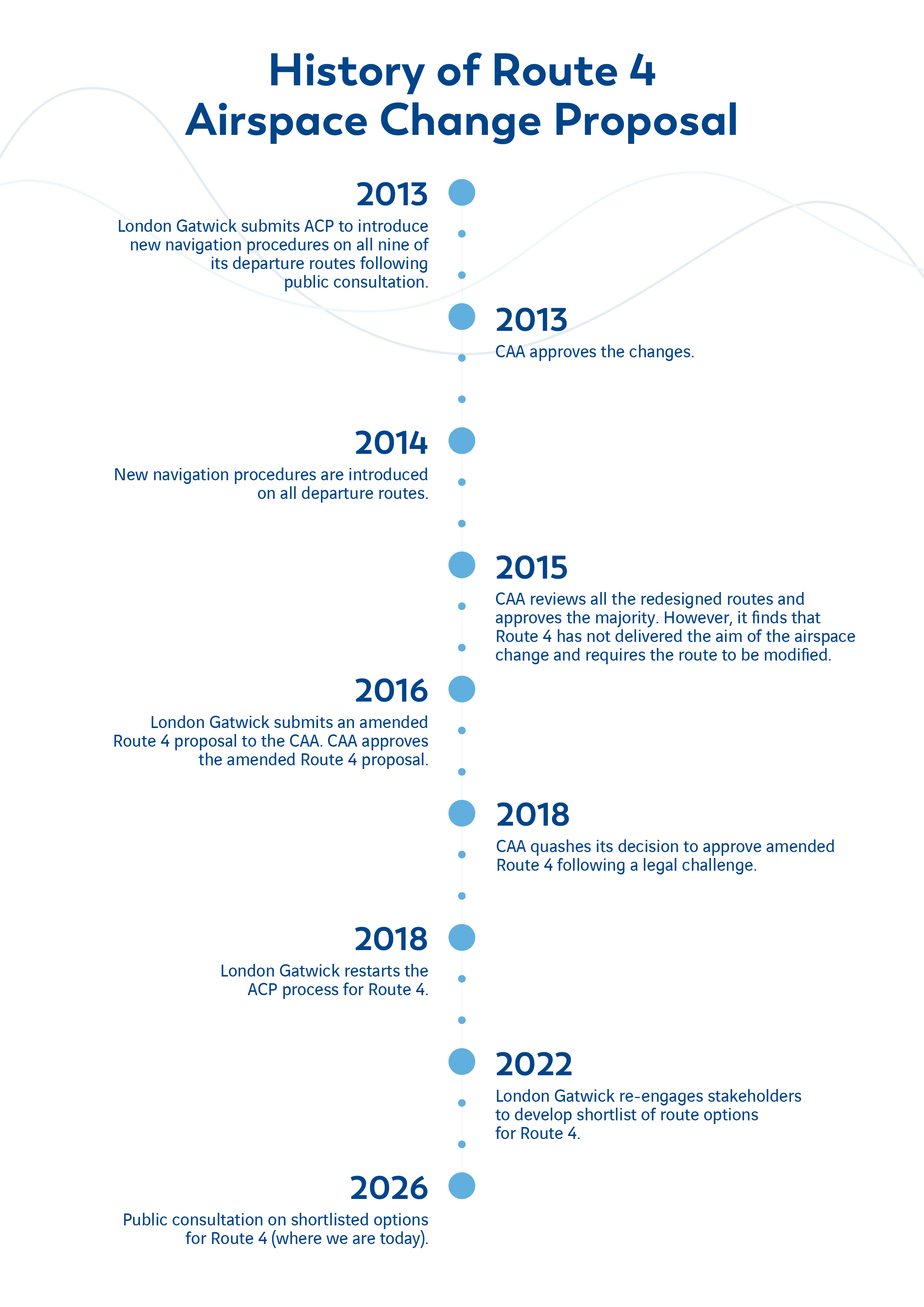
You can learn more about the history of Route 4 in Section 1 of the Consultation Document.
The Route 4 options
Route 4 is used by aircraft taking off west from the Main Runway, which then turn 180 degrees to head east. These aircraft fly near South Holmwood, Leigh, Redhill, and Reigate before continuing to their destinations.
The video below explains the four options which we consulted on. You can access standalone animations of each option at the footer of this webpage.
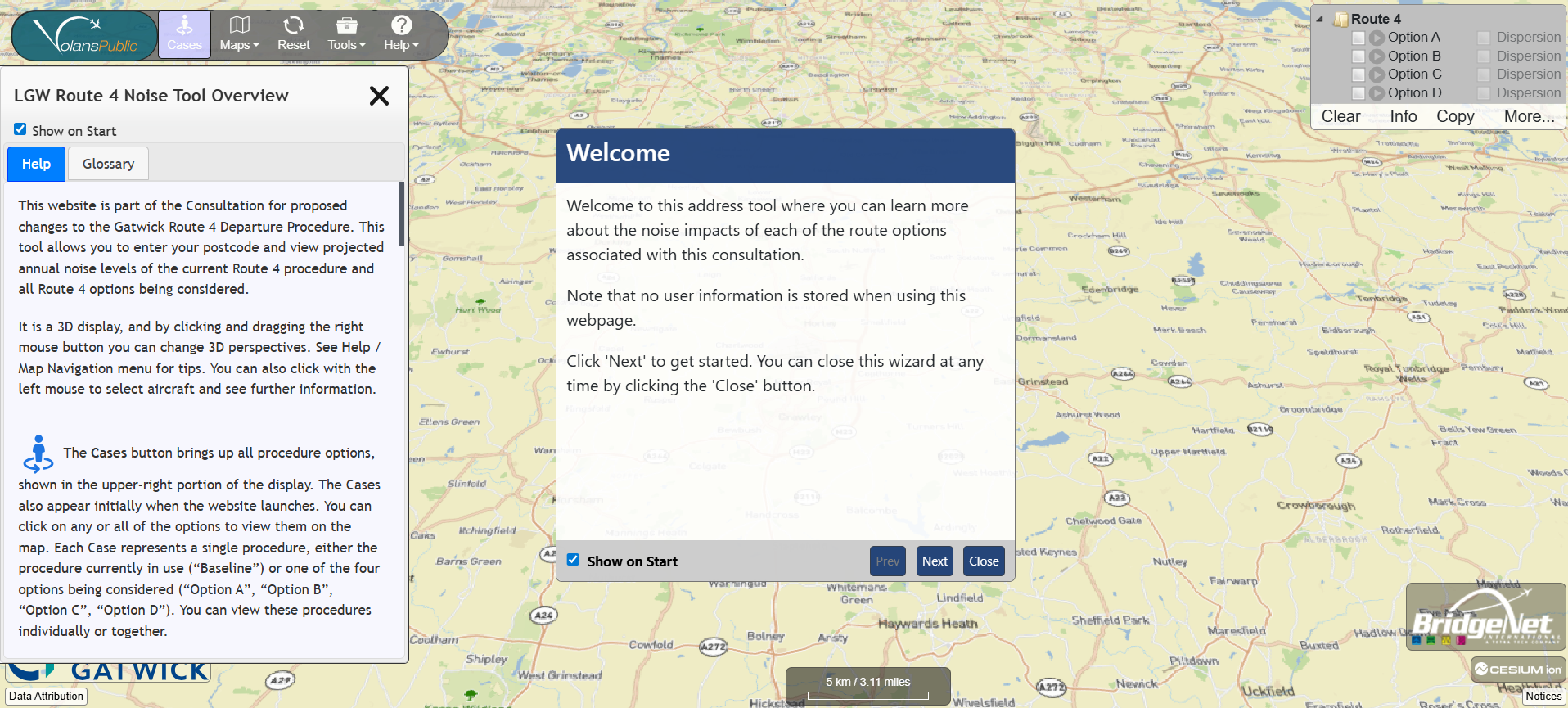
This postcode lookup tool enables you to compare and understand the relative noise impacts of each of the route options on different areas. Click on the thumbnail below to access the tool.
You can find out more about these options, and how they have been developed, in the Full Options Appraisal (FOA), Consultation Document, and Consultation Summary Document at the bottom of this page.
In developing these options, London Gatwick has engaged with stakeholders and the public at key stages, initially working with community and industry representatives to shortlist route options (Stages 1 and 2), and has now consulted the public to gather feedback on these options (Stage 3). An account of our engagement during Stages 1 and 2 are detailed in the Stage 1 Design Principles Report and Stage 2 Design Principles Evaluation at the bottom of this page.
Why your views matter
This consultation has now closed, and London Gatwick are now considering your views, which will form a key part of the decision-making process as to which route London Gatwick moves forward with. All feedback received will be considered and the proposals amended as necessary.
The feedback London Gatwick receives will influence which option is progressed. Whilst London Gatwick is required to list a preferred option, the final decision on which option to take forward will be influenced by the feedback received.
This consultation
This consultation ran from Tuesday 20 January 2026 until 23:59 on Tuesday 28 April 2026. It has now closed. The feedback received will influence the option which London Gatwick moves forward with as part of this airspace change proposal.
London Gatwick hosted four public exhibition events so residents and stakeholders could view information about this ACP, speak directly with the project team and ask any questions.
London Gatwick also hosted six webinars that presented the Airspace Change Proposal, like the in-person exhibitions. Each webinar also had a Q&A session.
You can find out more about our public exhibition events and view a recording of London Gatwick's webinars in the Events section below.
Printed copies of the key consultation materials were available to view at the following locations during the consultation period.
- Dorking Library, St Martin's Walk, Dorking RH4 1UT
- Reigate Library, Bancroft House, Bancroft Road, Reigate RH2 7RP
- Horley Library, 55-57 Russell Square, Victoria Road, Horley RH6 7QH
- Edenbridge Library, The Eden Centre, Four Elms Road, Edenbridge TN8 6BY
Have your say
This consultation was designed to enable you to help shape the future of Route 4, and London Gatwick is committed to putting your feedback at the centre of this decision. The Consultation Document lays out why London Gatwick is bringing these proposals forward, and what the preferred option is.
If you have any questions about the ACP process, the consultation, or the proposed changes themselves, please get in touch at LGWairspace.Rte4@gatwickairport.com or 0808 303 4560.
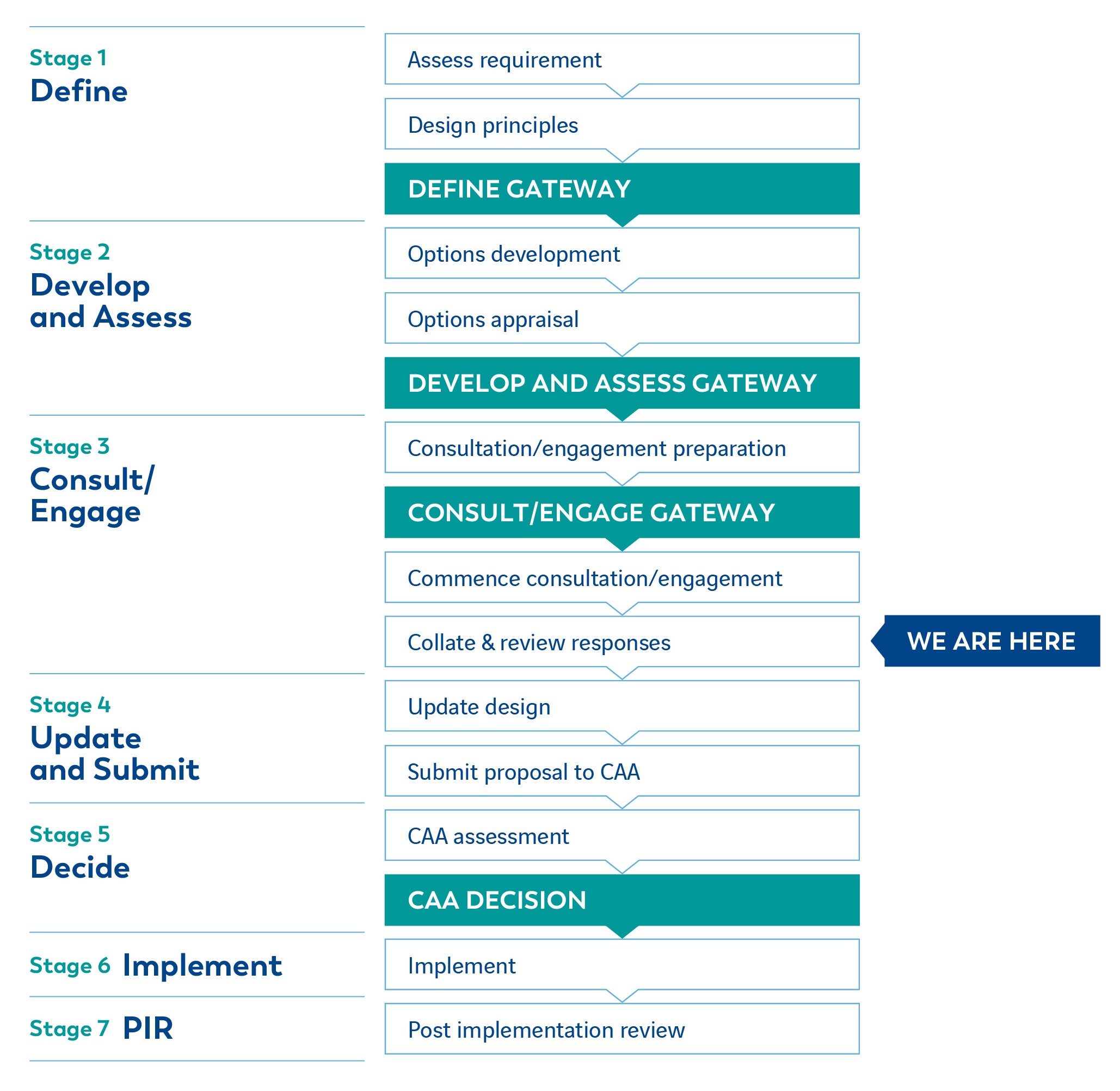
Once London Gatwick has reviewed all of the consultation feedback, the need to update the design of the ACP in light of the information received during the consultation will be considered. If major changes are required, then it may be appropriate to re-consult with stakeholders.
If further consultation is not required, then London Gatwick will prepare the final documentation for submission to the CAA, under Stage 4 of the CAP1616 process. The Consultation Response Document and the Final Options Appraisal will be submitted to the CAA and published on the CAA Portal.
The CAA will then review and assess the final ACP and may request further information or clarification ahead of making the regulatory decision. The CAA will then decide whether to approve the final ACP. This decision may be subject to modifications to, and conditions on, the final ACP.
At Stage 6, the approved final ACP will be implemented. At Stage 7, the Post Implementation Review will analyse the impact of the implemented airspace change to allow the CAA to determine if it has produced the intended outcomes.
What happens next
Once London Gatwick has reviewed all of the consultation feedback, the need to update the design of the ACP in light of the information received during the consultation will be considered. If major changes are required, then it may be appropriate to re-consult with stakeholders.
If further consultation is not required, then London Gatwick will prepare the final documentation for submission to the CAA, under Stage 4 of the CAP1616 process. The Consultation Response Document and the Final Options Appraisal will be submitted to the CAA and published on the CAA Portal.
The CAA will then review and assess the final ACP and may request further information or clarification ahead of making the regulatory decision. The CAA will then decide whether to approve the final ACP. This decision may be subject to modifications to, and conditions on, the final ACP.
At Stage 6, the approved final ACP will be implemented. At Stage 7, the Post Implementation Review will analyse the impact of the implemented airspace change to allow the CAA to determine if it has produced the intended outcomes.
Share
Share on Twitter Share on Facebook